
Coolant chemistry
The sample and laboratory report establish what is happening inside the system.
Zero Hour Certified Cooling System
Zero Hour brings QCA (Quarterly Coolant Analysis), external heat-transfer cleaning, condition-specific internal restoration, mechanical verification, seasonal optimization, and documented follow-up into one complete maintenance standard.
The shield means the complete package has been analyzed, cleaned, restored, protected, verified, and placed on a documented maintenance path.
The entire cooling system
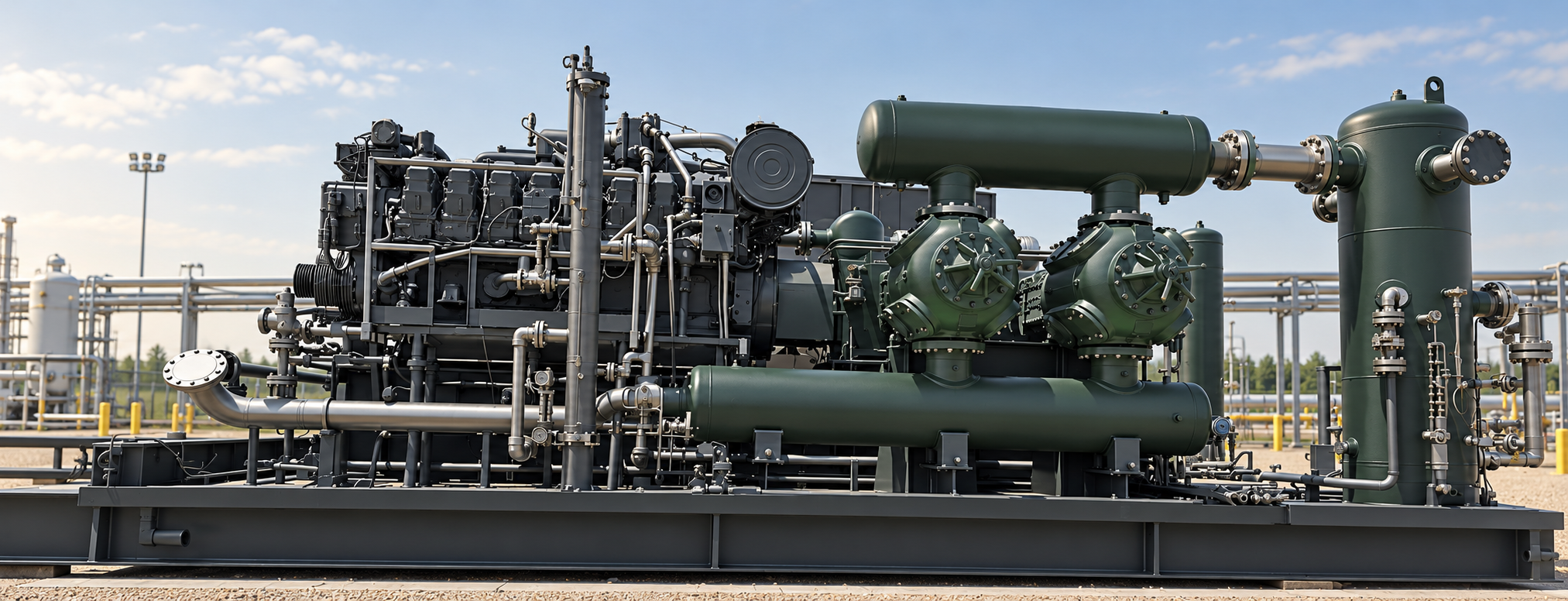
Reliable cooling depends on every part of the heat-transfer path—from a clean skid and fin-fan cooler to controlled coolant chemistry, open internal passages, sound mechanical components, and complete maintenance records.

The sample and laboratory report establish what is happening inside the system.
Clean jacket-water coolers and gas-section coolers support airflow, inspection, and heat rejection across the compression package.
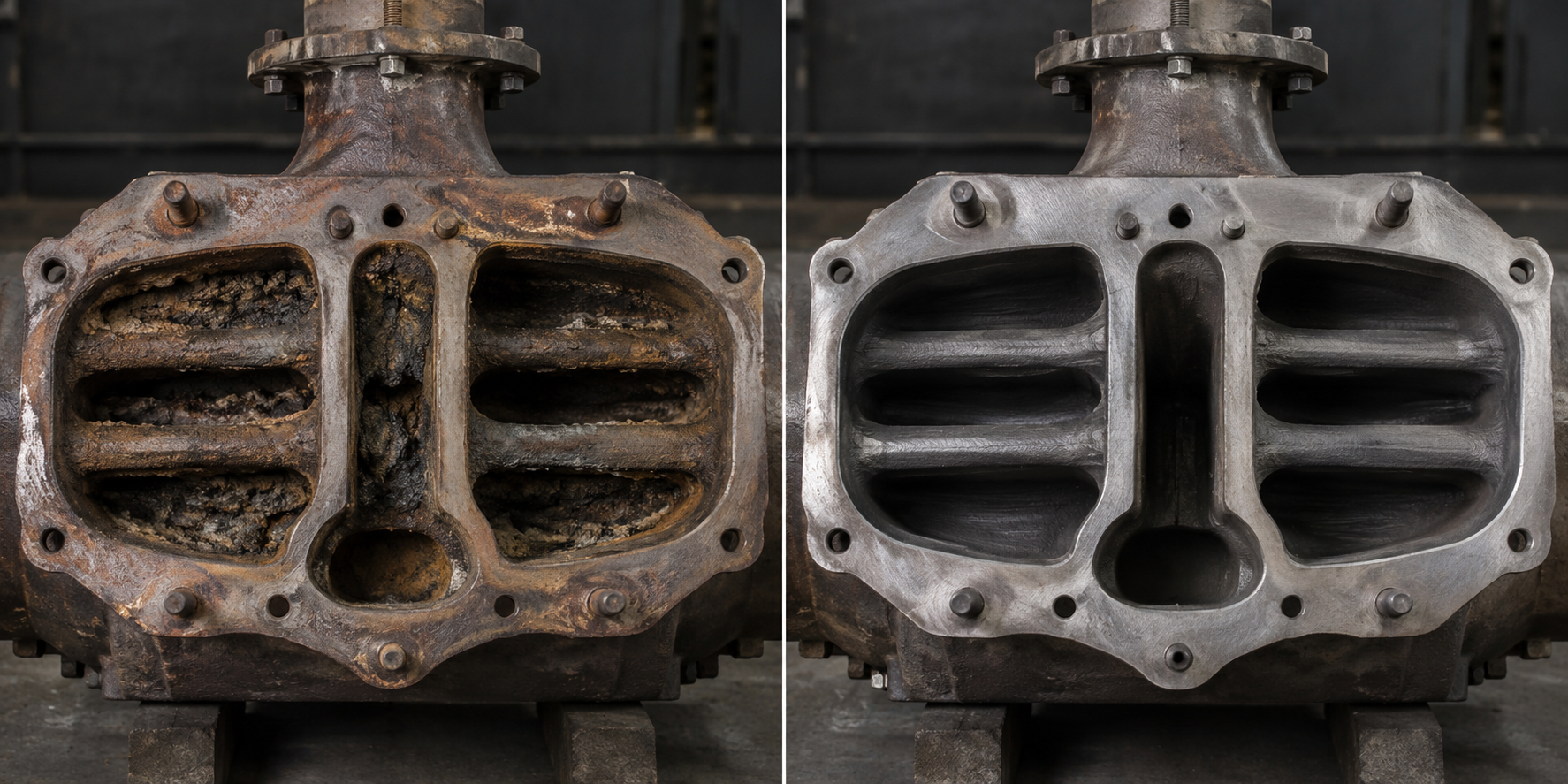
Condition-specific restoration removes contamination from engine passages and wet manifolds.
Pumps, thermostats, hoses, restrictions, leaks, and components are inspected and corrected.
Readings, findings, work performed, refill chemistry, and follow-up establish the baseline.
The Zero Hour path
Each stage answers a different maintenance question and creates the information needed for the next decision.
Collect a representative coolant sample, equipment history, operating symptoms, and field observations.
Restore external heat transfer and make leaks and developing conditions easier to identify.
Use only the Ultimate-FORCE treatment supported by the confirmed internal condition.
Refill with controlled chemistry and apply the appropriate seasonal operating strategy.
Record the result, verify performance, and protect the baseline with QCA (Quarterly Coolant Analysis).
Two ways to start
Zero Hour meets the operator where the evidence begins. ECA provides independent laboratory testing for QCA (Quarterly Coolant Analysis). If a current report already exists, C.U.R.E. uses it with the unit history to build the condition assessment and maintenance path.

Enhanced Coolant Analysis evaluates coolant chemistry, corrosion metals, additives, contamination indicators, freeze protection, pH, reserve alkalinity, conductivity, and system evidence.
Order ECA
The C.U.R.E. Protocol combines the report with equipment history and field evidence to Collect, Understand, Recommend, and Execute the appropriate procedure.
Open the C.U.R.E. applicationRestore heat transfer inside and outside
Zero Hour treats external airflow and internal coolant condition as two sides of the same heat-transfer problem.
External restoration
B.A.D. supports end-to-end skid and equipment cleaning. CC-300 removes field fouling from jacket-water coolers and gas-section coolers to help restore airflow and heat rejection.

Internal restoration
Ultimate-FORCE brings five specialized flushes into one coordinated family. The coolant evidence determines whether treatment is needed and which product or approved sequence applies.
Explore Ultimate-FORCEProtect year-round
Seasonal optimization is a major part of Zero Hour. The system moves between qualified warm-weather and freezing-weather fluids through a documented remove, label, store, test, reuse, and QCA monitoring cycle.
Reinstall the tested, qualified glycol coolant package for freeze protection. During glycol operation, CRI is maintained at the specified concentration to strengthen corrosion and rust protection that the glycol package alone does not provide. QCA verifies chemistry and condition through the freezing season.
Explore CRIFor qualifying applications where freeze protection is not required, CoolAint Summerize replaces the glycol mix during the warm season. Its light cleaning and corrosion-control properties help keep the restored system cleaner while documented results have averaged a 17°F temperature reduction and reached up to 20°F. QCA verifies chemistry and condition through the non-freezing season.
Explore CoolAint SummerizeDrain the outgoing fluid into clean, dedicated, compatible, sealed containers without mixing products.
Record the fluid, source unit, removal date, accumulated in-use time, container ID, and test status.
Protect stored fluid from contamination, water entry, mixing, and weather exposure under the current procedure.
Inspect, sample, and test before reinstallation. Reuse only qualified fluid, document the refill, and resume QCA monitoring.
CoolAint Summerize and the qualified glycol package each provide up to 24 months of in-use service life; properly stored time does not count toward either operating interval. With the specified inhibitor package and QCA monitoring, the program targets 99% rust-free operation.
What certification means
Certification reflects documented evidence that the agreed work scope was completed and the system is ready to return to a controlled maintenance program.
Identified contamination has been addressed with the correct procedure.
External surfaces and internal flow paths have been evaluated and corrected as required.
Leaks, restrictions, pumps, thermostats, hoses, and visible concerns have been inspected.
The refill chemistry, concentration, water quality, and inhibitor protection are controlled.
Findings, actions, readings, refill details, and the monitoring plan are recorded.
Verify the outcome
Zero Hour verification compares the restored system with its documented condition and operating baseline. Temperature results, chemistry, inspections, work performed, equipment identity, and ambient conditions remain tied to the unit record.
QCA (Quarterly Coolant Analysis)
Each QCA (Quarterly Coolant Analysis) sample and inspection is compared with the documented Zero Hour baseline so developing corrosion, contamination, additive depletion, recurring failures, and mechanical changes can be addressed early.
Zero Hour is the starting point for disciplined maintenance—not the end of the program.
Build the baseline
C.U.R.E. organizes the evidence into an understandable condition assessment, a focused recommendation, and an execution plan for the complete cooling system.